Facts and Figures
Why Choose Game Meat?
A natural, ethical, and community-rooted source of protein
Since the dawn of humanity, game meat has played a vital role in both human nutrition and cultural tradition. As a cornerstone of responsible hunting, it offers a wide range of benefits—nutritional, ecological, cultural, and economic. Wild game lives freely in its natural habitat and is harvested in a respectful, humane manner by hunters, providing a food source that is sustainable and closely tied to the rhythms of the land.
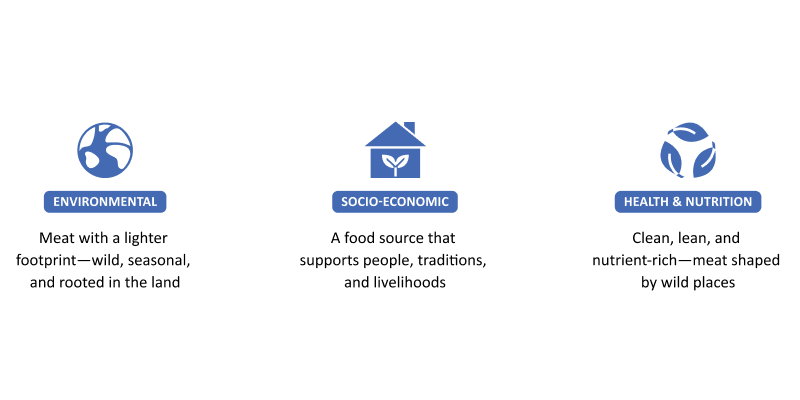
Environmental Benefits
1. Lower Environmental Impact Than Industrial Meat
Wild game meat has consistently been shown to have a far smaller carbon footprint than meat from intensively farmed livestock. One study (1) estimated emissions from hunted red deer at 4.85 kg CO₂e per kilogram of meat, with most of that impact resulting from hunter travel rather than the production process itself (2).
Other estimates are even lower. A Swedish food climate assessment by SLU (11) found that the footprint of truly wild, unmanaged game meat can be as low as 0.5 kg CO₂e per kilogram—provided the animals are not artificially fed or harvested for large-scale consumption. These numbers highlight just how low-impact wild meat can be when sourced sustainably, locally, and in moderation.
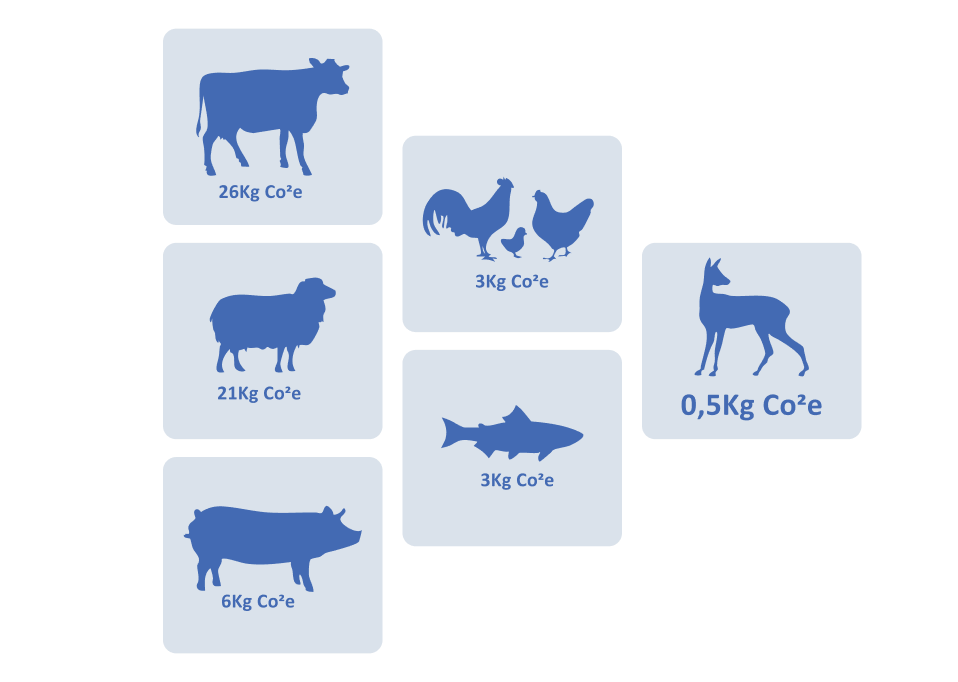
Carbon footprint of wild
game meat vs. industrial meats.
Adapted from SLU Food Climate List (2023) (11). Emissions from wild game meat can range from 0.5–4.85 kg CO₂e/kg depending on sourcing, feeding, and harvesting practices.
2. Supports Biodiversity and Habitat Conservation
Choosing wild game supports sustainable and ethical practices (2).
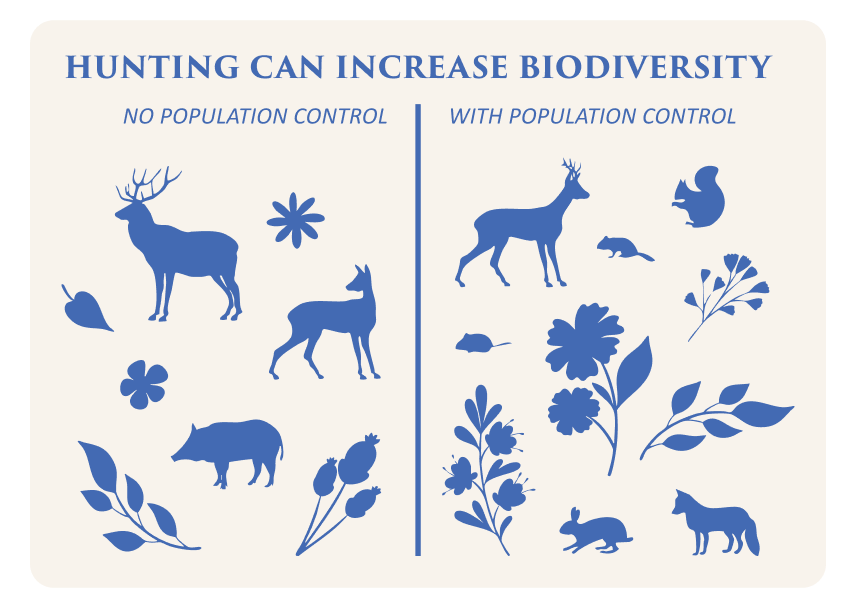
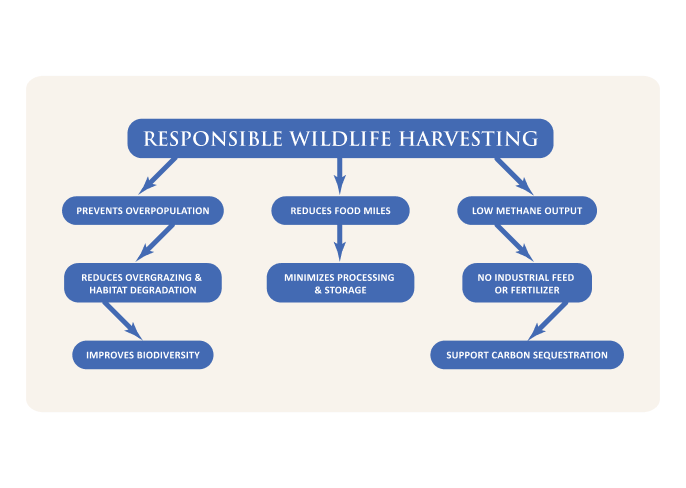
Game animals are typically harvested in controlled environments, contributing to the conservation of our local ecosystems. By regulating population sizes and preventing overgrazing, hunters play a crucial role in maintaining a balanced and healthy environment (3).
3. Reduces Food Miles through Local, Seasonal Sourcing
Opting for seasonal wild game reduces the carbon footprint associated
with food production and transportation (1).
Unlike commercially farmed meats that often travel long distances before reaching consumers,
game sourced locally has a significantly lower environmental impact (1).
Embracing the “eat local” philosophy by consuming game from nearby sources can
contribute to a more sustainable and eco-friendly lifestyle (3).
Socio-Economic Benefits
1. Protein Security in Rural Areas
Bushmeat hunting provides meat for urban and rural families, and as a source of income, is a common component of household economies throughout the supply chain—from the hunter to urban markets and food stalls (4). In many rural areas, bushmeat is the only source of protein available daily (together with fish close to rivers) and as such plays an essential role in people’s diets (6). Hunting provides between 30–80% of the overall protein intake of rural households in Central Africa and nearly 100% of animal proteins (5).
2. Income and Resilience
Some people depend on wildlife resources as a full-time source of income, but most keep bushmeat as a buffer in times of hardship (e.g., unemployment, illness of relatives, crop failure), or to gain additional income for special needs (e.g., school fees, festivals, funerals) (4). Wildlife products also have high medicinal and spiritual values in many human cultures (4) .
3. Data as a Real-World Reference
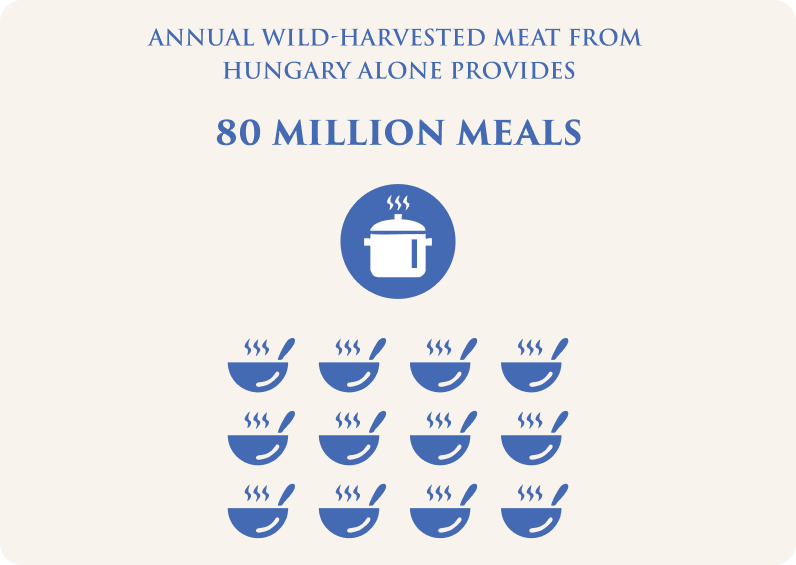
Hungary’s game meat data is featured here as a practical case study, chosen for its availability, consistency, and national-level tracking through the Országos Vadgazdálkodási Adattár (National Game Management Database).
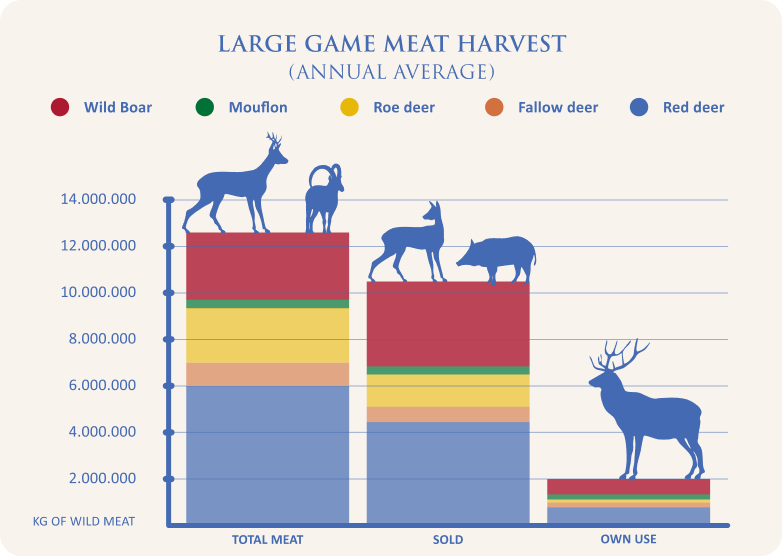
Hungary’s Annual Game Meat Revenue: €20.6 million
Contribution to Hungarian GDP: > 0.1%
Based on Országos Vadgazdálkodási Adattár
(National Game Management Database)
Health
&
Nutrition Benefits
Clean, lean, and nutrient-rich—meat
shaped by wild places, not feedlots.
1. Health That Starts in the Landscape
Animals that forage freely on diverse, native vegetation absorb more than just nutrients—they reflect the richness of the land. A growing body of research suggests that wild and pasture-fed herbivores accumulate a wide range of bioactive compounds in their tissues, including antioxidants, phenols, and terpenes found in wild plants (7).These compounds are known to support immune function in animals and may contribute to the overall quality and complexity of the meat. When we eat wild game, we’re not just consuming meat—we’re taking in a piece of the ecosystem it came from. The vitality of the land flows through the animal, and ultimately, to us.
2. Nutritional Profile and Dietary Purity
Wild game meat is typically lower in fat and cholesterol than meat from domesticated livestock, while offering comparable or superior levels of protein and essential micronutrients (8).
Because wild animals feed on natural forage and are not administered pharmaceuticals or synthetic feed, their meat is free from residues commonly found in intensively farmed products (2).
The free-ranging, seasonal movements of these animals contribute to a leaner, more muscular carcass, and their diverse natural diets are associated with a healthier balance of fatty acids—particularly a higher proportion of polyunsaturated fats and omega-3s (3).
This combination of nutritional integrity, absence of additives, and alignment with natural ecological rhythms positions wild game as a valuable component of a nutrient-rich and minimally processed diet (2).
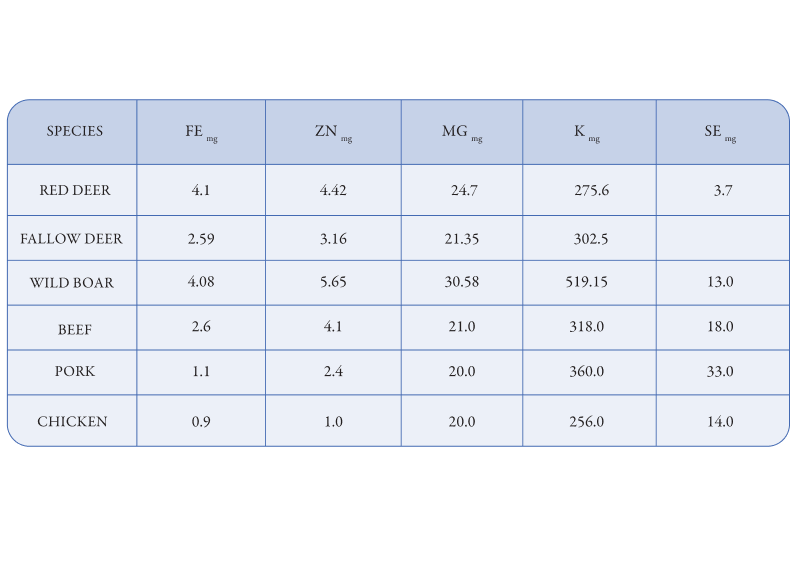
Average Mineral Content of Meat (per 100g)
Comparison of selected wild game (red deer, fallow deer, wild boar) and domestic species (beef, pork, chicken). Wild game values are averaged from loin and leg cuts using data from European studies. Domestic values sourced from USDA FoodData Central and EFSA. All values approximate and intended for general comparison.
3. Favourable Fatty Acids and Micronutrient Content
Studies of wild game meat from Central and Mediterranean Europe indicate several consistent advantages compared to conventional livestock meat (8):
- Lower total fat content: < 3 g/100 g for large game species; < 4 g/100 g for small game
- Higher or similar protein levels
- Favourable fatty acid profiles: greater proportions of polyunsaturated fats (PUFAs), particularly n-3, and more balanced PUFA/SFA ratios
- CLA content: relatively high in wild boar
- Optimal n-6/n-3 ratios: especially in red and fallow deer
- Elevated micronutrient levels: especially zinc and bioavailable heme iron (Fe)
These characteristics are shaped by both the animals' diets
and their free-ranging, physically active lifestyles.
Protein and Fat Content in Domestic vs. Wild Meats
Wild game meats like deer and elk tend to be higher in protein and significantly lower in fat than common domestic meats. This makes them a lean, nutrient-dense alternative for health-conscious diets. Adapted from (9)
Ethics and Animal Welfare
Wild game animals live freely in the landscapes they belong to—feeding on native plants, moving with the seasons, and reflecting the beauty and balance of their environment.
An ethical hunter places great importance on taking an animal cleanly and respectfully. The effort, patience, and skill required are part of what makes the harvest meaningful—and the meat deeply valued (10).
References
- Fiala, M., Marveggio, D., Viganò, R., Demartini, E., Nonini, L., & Gaviglio, A. (2020). LCA and wild animals: Results from wild deer culled in a northern Italy hunting district. Journal of Cleaner Production, 244, 118667. https://doi.org/10.1016/j.jclepro.2019.118667
- Needham, T., Bureš, D., Černý, J., & Hoffman, L. C. (2023). Overview of game meat utilisation challenges and opportunities: A European perspective. Meat Science, 204, 109284. https://doi.org/10.1016/j.meatsci.2023.109284
- The Salt Box. (2023, October 18). Six Benefits of Eating Seasonal Wild Game Meat. https://wearethesaltbox.co.uk/six-benefits-of-eating-seasonal-wild-game-meat/
- van Vliet, N., & and Mbazza, P. (2011). Recognizing the Multiple Reasons for Bushmeat Consumption in Urban Areas: A Necessary Step Toward the Sustainable Use of Wildlife for Food in Central Africa. Human Dimensions of Wildlife, 16(1), 45–54. https://doi.org/10.1080/10871209.2010.523924
- van Vliet, N. (2011). Livelihood alternatives for the unsustainable use of Bushmeat—Wildlife Trade Report from TRAFFIC. https://www.traffic.org/publications/reports/livelihood-alternatives-for-the-unsustainable-use-of-bushmeat/
- van Vliet, N., & Nasi, R. (2008). Hunting for Livelihood in Northeast Gabon: Patterns, Evolution, and Sustainability. Ecology and Society, 13(2). https://www.jstor.org/stable/26267975
- van Vliet, S., Provenza, F. D., & Kronberg, S. L. (2021). Health-Promoting Phytonutrients Are Higher in Grass-Fed Meat and Milk. Frontiers in Sustainable Food Systems, 4. https://doi.org/10.3389/fsufs.2020.555426
- Soriano, A., Sánchez-García, C., Soriano, A., & Sánchez-García, C. (2021). Nutritional Composition of Game Meat from Wild Species Harvested in Europe. In Meat and Nutrition. IntechOpen. https://doi.org/10.5772/intechopen.97763
- Alaska Department of Fish and Game. (n.d.). Nutritional Value of Alaskan Big Game, Alaska Department of Fish and Game. https://www.adfg.alaska.gov/index.cfm?adfg=hunting.eating
- Williams, T. (2023). Ethical Hunting: The Ultimate Organic Food Source. Hunter-ed. https://hunter-ed.com/blog/ethical-hunting-ultimate-sustainable-food-source/
- Röös, E. (2014). Mat-klimat-listan Version 1.1. SLU Future Food. https://www.slu.se/centrumbildningar-och-projekt/futurefood/publikationer/framtidens-lantbruk/mat-klimat-listan-version-1.1/
- Arroyo, B., & Beja, P. (2022). RECONCILING GAMEBIRD HUNTING AND BIODIVERSITY (REGHAB). Impact of hunting management practices on biodiversity. Instituto de Investigación en Recursos Cinegéticos (IREC). https://digital.csic.es/bitstream/10261/8260/1/WP2-repportf.PDF