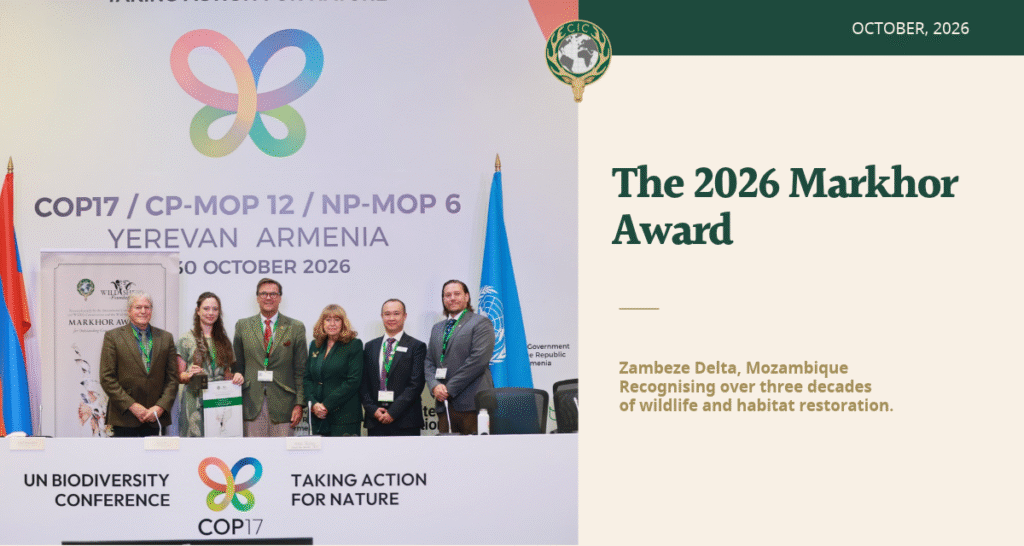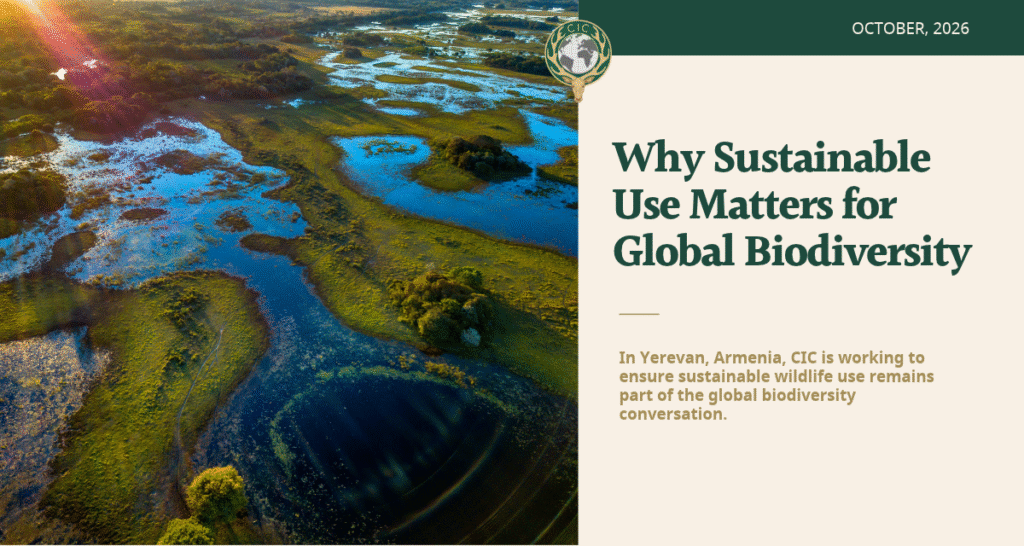
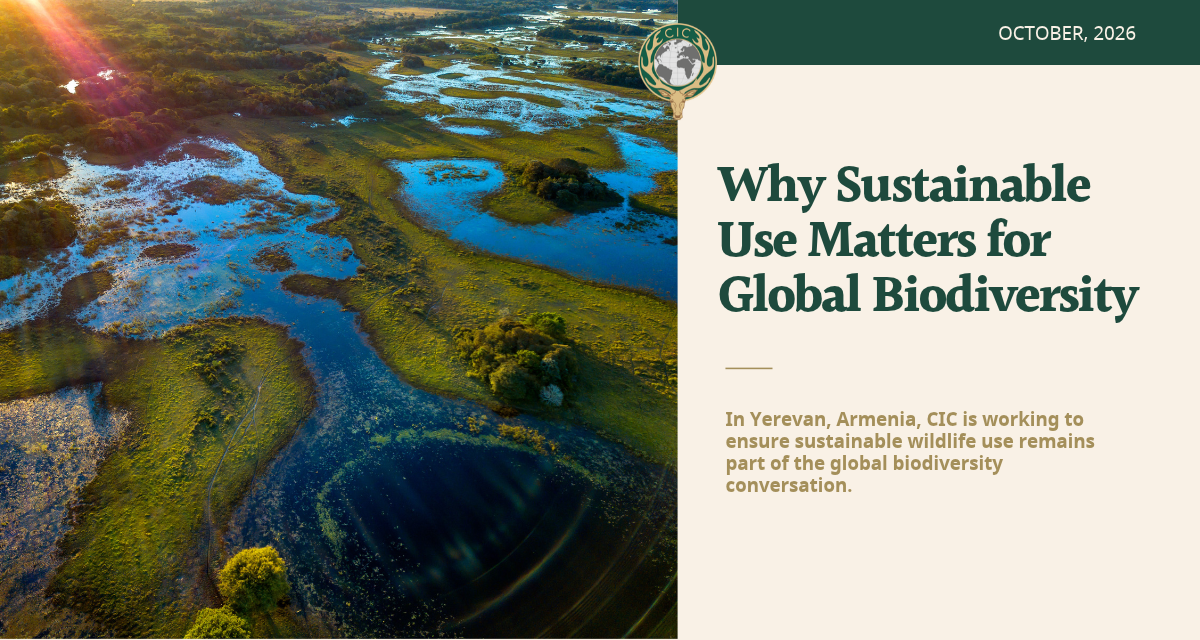
The 17th Conference of the Parties to the Convention on Biological Diversity (CBD COP17), held in Yerevan, Armenia, provides an important opportunity to discuss the future of biodiversity conservation and the role of sustainable use. For the International Council for Game and Wildlife Conservation (CIC), participation in these discussions is essential to ensuring that science-based wildlife management and the perspectives of the sustainable-use community are represented in international biodiversity policy.
Sustainable Use as a Fundamental Objective
The Convention on Biological Diversity (CBD) has three fundamental objectives: the conservation of biological diversity, the sustainable use of its components, and the fair and equitable sharing of benefits arising from the utilisation of genetic resources.
Sustainable use is also an important element of the Kunming–Montreal Global Biodiversity Framework, which provides a global roadmap for halting and reversing biodiversity loss.
For CIC, this means promoting an approach to conservation that considers not only the protection of species and ecosystems, but also how wildlife can be managed responsibly over the long term. Science-based management and the sustainable use of wildlife can contribute to conservation while supporting the livelihoods of people and communities who depend on natural resources.
Representing Sustainable Use in International Discussions
At CBD COP17, CIC continues its engagement with governments, international institutions and conservation partners to promote science-based wildlife management and the contribution of sustainable use to biodiversity conservation.
CIC’s distinctive standing within CBD processes provides an important channel for sharing expertise and bringing the perspectives of the wider sustainable-use community into international discussions.
This engagement also supports CIC’s State Members by providing opportunities to exchange knowledge, contribute to discussions and address issues relevant to hunting, wildlife management and conservation at the international level.
By participating in these processes, CIC helps connect practical experience in wildlife management with the broader objectives and discussions shaping global biodiversity policy.
Connecting Biodiversity Conservation with Rural Livelihoods
Effective biodiversity conservation involves more than protecting individual species. It also requires consideration of how ecosystems are managed, how conservation measures affect local communities and how the benefits of conservation can be sustained over time.
In many rural areas, wildlife and natural resources are closely connected to livelihoods, cultural traditions and local economic activity. Approaches to conservation therefore need to consider the relationship between biodiversity, sustainable management and the people who live alongside wildlife.
CIC advocates for science-based approaches that recognise these connections and consider the role of sustainable use within broader conservation strategies.
Why CIC’s Engagement Matters
International biodiversity discussions help shape the frameworks, priorities and approaches that guide conservation efforts worldwide. Ensuring that different perspectives and relevant expertise are represented is an important part of these processes.
Through its participation at CBD COP17, CIC continues to engage with international partners, share knowledge and support the recognition of sustainable use as part of the global biodiversity conversation.
The central message is that biodiversity conservation and sustainable use should be considered together. Protecting species and ecosystems, managing wildlife responsibly and recognising the needs of rural communities are interconnected parts of the wider conservation challenge.
CIC’s continued engagement at CBD COP17 reflects its commitment to promoting science-based wildlife management and ensuring that sustainable use remains part of discussions about the future of biodiversity.