
Trophy Evaluation System
Monitoring wildlife populations through standardised and scientifically grounded evaluation methods.
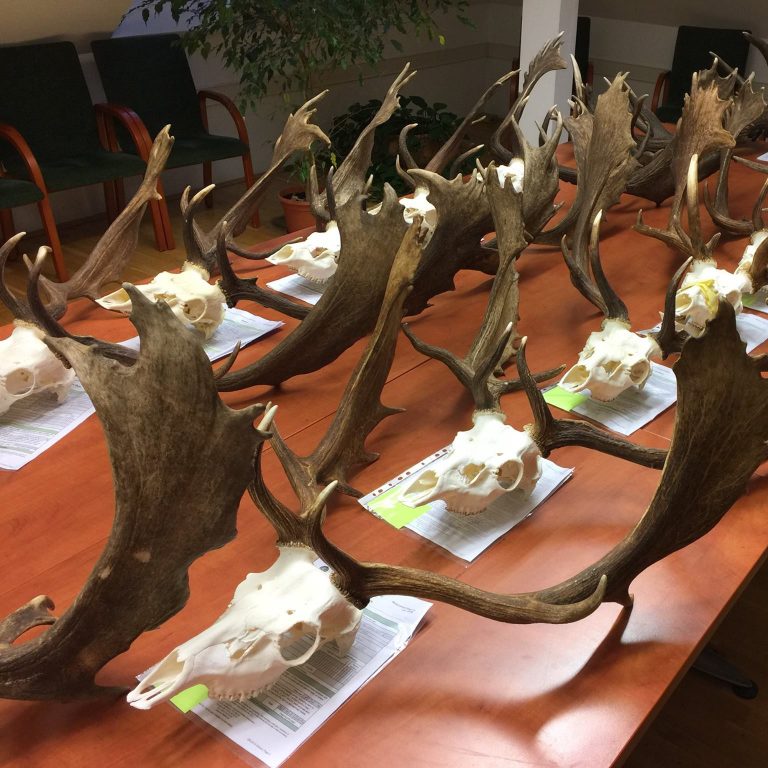
The CIC Trophy Evaluation System (TES) supports biodiversity monitoring and sustainable wildlife management by applying internationally standardised scientific methods to harvested specimens. Established in 1930, the system traces its origins to the first red deer trophy formula developed by Herbert Nadler in 1925. Since then, the CIC Formula has been refined and internationally accepted, ensuring reliable and transparent data collection that contributes to conservation science.
Purpose of the TES
The TES provides a framework for understanding wildlife population structures, age composition, and species development. By focusing on scientifically robust evaluation methods, the system delivers information that helps governments, researchers, and communities make informed decisions about conservation and sustainable use.
TES contributes to:
Long-term datasets on species and population dynamics
Monitoring the effects of harvest strategies on wildlife health
Strengthening ethical and sustainable harvest practices
Supporting international reporting under biodiversity conventions such as the CBD and CMS
Standards and Methodology
The TES is grounded in the CIC Formula, an internationally recognised method for evaluating specimens. To ensure accuracy and comparability, evaluations follow strict protocols:
A mandatory 30-day drying period for specimens, ensuring consistent measurement conditions
Only certified CIC Measurers, trained under rigorous standards, may conduct evaluations
Data are classified into categories (antelopes, bovids, cervids, skulls, tusks) following species-specific guidelines
Detailed handbooks include descriptions, distribution maps, and measurement parameters to support scientific reliability
This approach guarantees that TES results are not only relevant to hunters but, more importantly, serve as a valuable contribution to international wildlife research and conservation planning.
Governance of the TES
The Trophy Evaluation Board (TEB), composed of Senior International Trophy Judges nominated by CIC member countries, oversees the integrity of the TES. Their task is to ensure that the system remains scientifically credible, transparent, and aligned with conservation priorities.
Certified CIC Measurers (CCMs) contribute to the Trophy Evaluation Database (TED) by submitting measurements from the field. This database provides an international repository of biodiversity data that informs research, policy development, and conservation initiatives worldwide.
Contribution to Global Conservation
The rigorous processes of the TES ensure that CIC contributes to global standards for evidence-based wildlife management. The system provides governments, conservation bodies, and local communities with reliable data that strengthen biodiversity protection and sustainable use.
Through the TES, CIC helps:
Document conservation success stories
Support population management and habitat protection
Provide a scientific evidence base for international conservation strategies
Build cooperation between hunters, scientists, and policymakers in service of biodiversity.