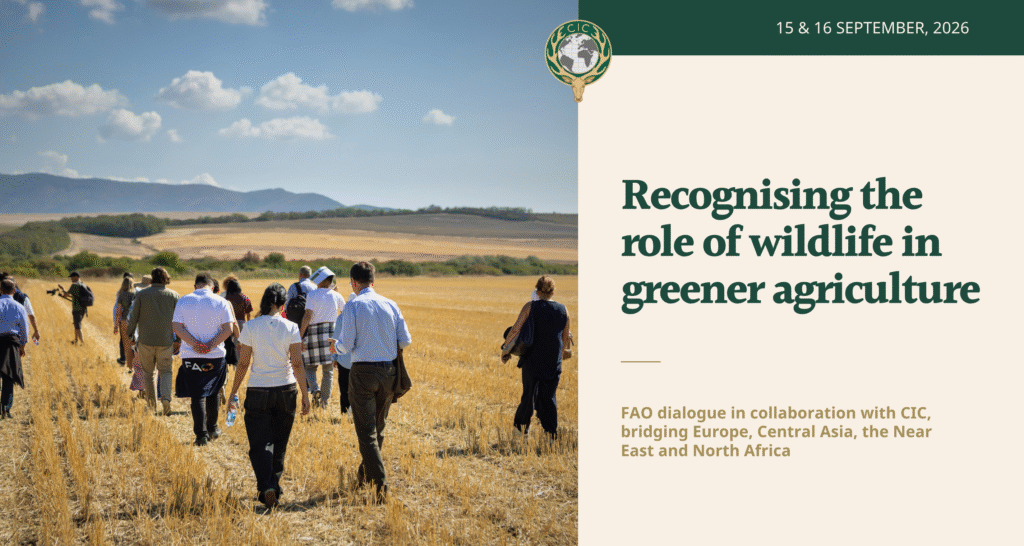

As part of the LECA Project, the CIC recently participated in a hands-on lynx monitoring workshop in Slovakia’s Selmec Mountains. The two-day field training, co-organised by WWF Hungary and the Technical University in Zvolen, brought together rangers, foresters, researchers, and regional hunting managers for a unique exchange of knowledge, tools, and techniques.
With a focus on camera trap deployment and the challenges of monitoring a wide-ranging and elusive predator, the workshop reflected the LECA Project’s broader mission: improving coexistence between humans and large carnivores across the Carpathian region.
GPS Tracking Unlocks Secrets of Lynx Movement
Slovak researcher Jakub Kubala presented findings from over ten years of GPS tracking work. His research showed that male lynx can roam across territories larger than 300 km² with minimal overlap — strong evidence of their territorial nature. Females, particularly those raising young, inhabit smaller, more stable ranges.
These insights help explain inconsistencies in camera-trap data. As ambush predators, lynx do not move evenly across their territory. They roam in bursts, shifting between prey-rich areas based on season, road access, and forest cover. Understanding this behaviour is critical to interpreting gaps in monitoring results and guiding future data collection.


A Key Role for Hunters in Conservation Science
The workshop underscored the crucial role hunters can play in large carnivore conservation. With deep knowledge of local terrain, regular field presence, and access to remote areas, hunters are ideally placed to support data collection and monitoring.
Digital tools such as the WeHunt app — supported by Natlink — can enhance these efforts. When paired with clear reporting protocols, such tools can ensure that hunter-generated data meets scientific standards, improves transparency, and contributes to long-term monitoring strategies.
Monitoring That Builds Trust and Science
One key message from the training: sound, transparent monitoring systems are the foundation of any credible management plan. For lynx and other large carnivores, sex ratio data is particularly important. While the careful removal of a few adult males may be biologically sustainable, harvesting females — especially those raising cubs — can severely impact population viability.
As lynx populations slowly return to human-influenced landscapes across Europe, effective management will require both solid science and local trust. The CIC continues to champion collaborative efforts like the LECA Project, which bring together stakeholders from across the spectrum of conservation, hunting, and land management to work on shared ground.
Related Links:
Media Contact:
Tristan Breijer MBA FRGS FRSA MCIJ
Director of Communications and Public Affairs
CIC – International Council for Game and Wildlife Conservation
Email: tristan.breijer@cic-wildlife.org
Mobile: +44 781 408 7423
Website: www.cic-wildlife.org